

I’ve always believed that architecture is more than the sum of its materials. It’s a dialogue between material elements and intangible ones. The site with its environment and the history of the place, the construction materials with their fabric colors and patterns, and the culture and tradition of the people who will live in the space.
This idea of architecture was reaffirmed during my recent visits to Puerto Princesa City in Palawan and Manolo Fortich town in Bukidnon.
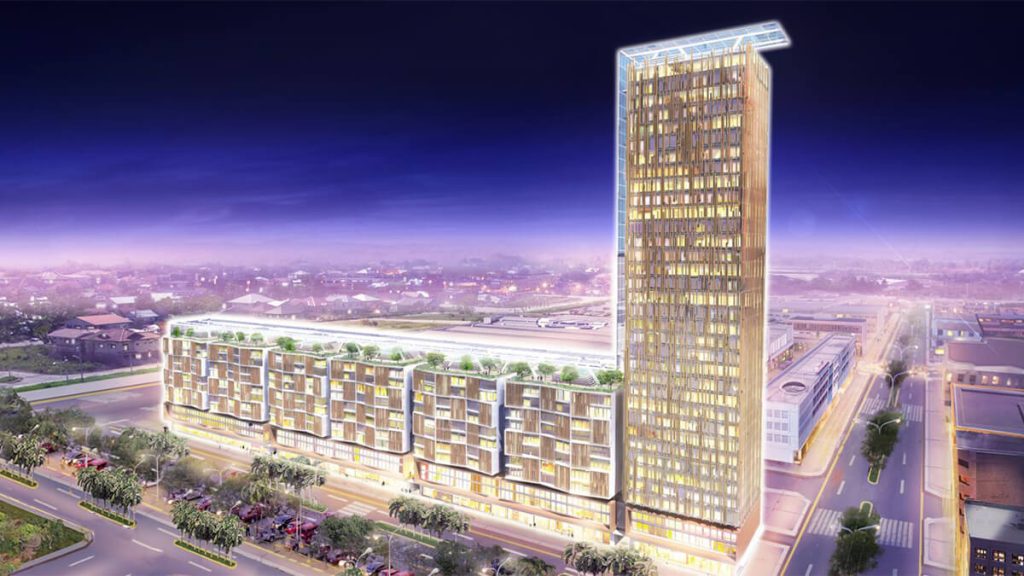
It was the first time for me and Italpinas Development Corporation (IDC) president Atty. Jojo Leviste to meet with Puerto Princesa City Mayor Lucilo Bayron at the city hall, where we discussed the company’s upcoming projects in the area, and specifically in Riviera Puerto, Verona Bancao Bancao, Verona Tiniguiban, Verona Honda Bay, and the development of a mini township of more than 8 hectares also in Bancao Bancao. All projects will be designed, built, and managed following Italpinas sustainable approach to development.
A few days later, in Bukidnon’s Manolo Fortich, Mayor Rogelio Quiño introduced the IDC team to Dahilayan’s cool highlands. There, we laid the groundwork for Moena Mountain Estate, our hotel development that will be managed by Dusit with the “Princess” brand.
Moena will be a place where wellness meets wilderness, and where architecture blends with the mountain’s majesty.
Our visits to Palawan and Bukidnon were strategic steps toward co-creating green buildings and sustainable communities with the local government units (LGUs) where we intend to operate. Italpinas looks forward to working hand-in-hand with these LGUs to build a future that’s not only greener but more inclusive and more joyful.
Speaking of joy, a recent international survey ranked Filipinos among the happiest people in the world. The World Happiness Report 2025 ranked the Philippines 57th out of 147 countries. While the ranking was lower than the previous year’s 53rd, the country remains 4th happiest in Southeast Asia, behind Singapore, Malaysia, and Thailand.
That finding stayed with me. I thought that if happiness is a national trait, then our built environments should reflect it—not just through aesthetics, but through accessibility, sustainability, and essence. Architecture, as I have been advocating, must become a mirror of the Filipino spirit: resilient, optimistic, and deeply rooted in community.
In a recent interview, I shared my thoughts on the shifting real estate landscape. Metro Manila, once the epicenter of development, is now facing a disalignment between supply and demand. Sales have slowed, and the market feels saturated.
In the emerging cities in the country, we are seeing a different scenario where sales are strong and the future of sustainable real estate looks promising.
As tourism surges across the Philippines—with Palawan seeing a 90% increase in visitors and Bukidnon gaining traction through agri-tourism and adventure parks—developers have a unique opportunity to shape destinations that do more than accommodate travelers.
From my point of view, the challenge is not just to build, but to belong: to create spaces that reflect the soul of a region, support local economies, and protect ecological and cultural heritage.
This is where architecture becomes advocacy. Property developers must ask: Are we designing for profit alone, or for purpose? Are we listening to the land, to the communities and their tradition, or are we imposing upon it? The answers shape not just skylines, but futures.
As an Italian who considers himself partly Filipino, I carry both identities in my work. Italy taught me precision and elegance; the Philippines taught me empathy and adaptability. Together, they form the backbone of a design philosophy reflected in every project we undertake.
Every developer must take this to heart: architecture is not just about what we construct, it is also about what we cultivate.
#PropertyReportFeature
#FeaturedStory